


When I read Nikole Hannah-Jones’ recent piece in the NYT, my heart sank in my chest. I was also infuriated as I read about the horrific events at Cornell. These events remind me of the conversations around our dinner table, and the feeling I had in my own classrooms as a teacher. It is the familiar feeling of wanting desperately to create the conditions for young people to thrive in safe and nurturing spaces, but feeling like the problem is so much bigger than one family, student, or school.
None of us can escape that we are all navigating education systems that uphold this country’s racial and gender inequities. They are systems that are often segregated, underfunded, and highly resistant to change. There are exceptions, of course, but our children deserve a default system that unwaveringly cultivates their mind, body, and spirit toward flourishing.
It’s no wonder Americans’ satisfaction with K-12 education is at a record low and test scores remain below pre-pandemic levels. Teachers’ work is harder than ever. COVID wreaked havoc on education systems, and chronic absenteeism and achievement levels have yet to recover. This is combined with the expansion of AI in schools and a rapidly changing job market.
Most schools are doing the best with what they have, and many teachers are among the hardest-working people I know. It is not easy being in a profession that requires the best of what you have to give every day. When your “clients” are young people whose future is shaped by their experience in your classroom, the pressure is on. From my own experience, standing in front of a room of young people every single day will keep you humble.
Access to high-quality instruction is critical for students, and in high-poverty schools, it matters even more. While core instruction is a truly vital part of schooling, there is another critical and often overlooked factor that might be the missing puzzle piece: trusted adults.
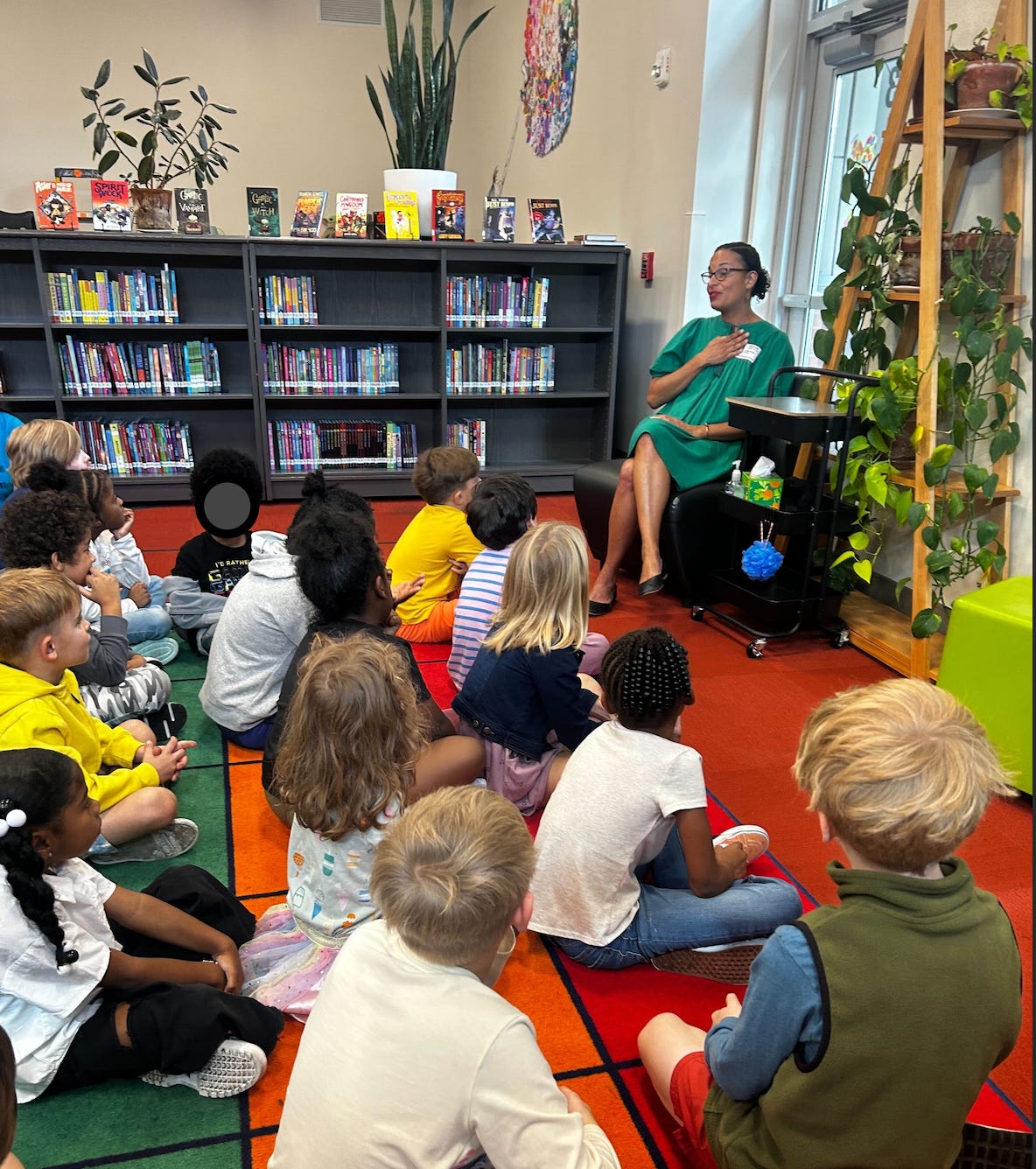
Photo: Me in front of a class of young people at our son’s school several years ago, talking about the importance of trust.
Trust in Schools
It has been proven that trust is a game changer in schools. In their study of Chicago elementary schools over twenty years ago, Bryk and Schneider (2002) found that schools with high relational trust were far more likely to show gains in student learning.
Research also shows that trusting relationships have lasting impacts. The Harvard Study of Adult Development, which has followed participants since 1938, found that close relationships, more than money or fame, are what keep people happy throughout their lives. Trusted relationships formed in childhood and adolescence can create a foundation that shapes well-being decades later.
Trusting relationships are a protective factor that can truly change a young person’s trajectory.
A Deeper Dive into the Role of Trusted Adults
Several years ago, my organization, the Center for Trust and Transformation*, partnered with Equal Opportunity Schools to analyze anonymized trusted adult data from 2016 to 2020 for 1.8 million high school students and 77,000 staff in 1,404 schools and 450 districts across the United States. We analyzed trusted adult patterns and achievement data to better understand the role of trusted adults in students’ experiences and outcomes. The findings, particularly those disaggregated by race, were staggering.
Who Do Students Trust
On average, 77 percent of surveyed high school students reported having a trusted adult in at least one out of five years, but nearly one in four students went through a stretch of their school years with none. About two-thirds of students named a teacher as their trusted adult, but the remaining third named counselors, coaches, office staff, custodians, and other non-instructional staff. This was fascinating and really speaks to how non-instructional staff can be a critical part of the relational fabric of schools.
We also found that access to trusted adults is not equitable across student groups. Black, Indigenous, Latine, and Hawaiian or Pacific Islander students consistently reported trusted adults at lower rates than White and Asian students.
Students were more likely to name a trusted adult who shared their identity. This was true for Black, Latine, White, Asian, and Indigenous students. Broader research points to positive outcomes from this pattern. Black students taught by Black teachers often experience academic and social-emotional benefits, including fewer suspensions (Lindsay & Hart, 2017).
For Indigenous students, the story is more nuanced. Only 37 percent of schools in the sample had an Indigenous staff member at all. Where an Indigenous adult was present, Indigenous students were somewhat more likely to name them as trusted. But for most Indigenous students, that chance is rare.
To be clear, teachers of all backgrounds can build deep, lasting trust with students of every identity. But trust is also racialized and shaped by the same histories and dynamics that inform our society. The data show a clear population-level trend that suggests that when schools diversify their teaching staff, more students gain access to trusted adults.
Teacher expectations also shape who gets invested in, relationally and academically. Teachers’ perceptions of a student’s “teachability” strongly predict how much they trust that student (Van Maele & Van Houtte, 2011). Those perceptions are not race-neutral. In the EOS data, GPA had a marginal effect on whether White and Asian students were referred; however, Black, Latine, and Indigenous students were more likely to be referred for advanced courses when they had higher GPAs. This points to some of the additional hurdles Black, Latine, and Indigenous students have to overcome to get access to advanced placement opportunities.
Research shows that non-Black teachers hold significantly lower expectations for Black students than Black teachers do (Gershenson, Holt & Papageorge, 2016), and secondary teachers expect less of students of color and low-income students overall (Center for American Progress, 2014). This means trusted adults and high expectations may be least available to the students who stand to gain the most from them.
Mentors as Trusted Adults
Young people can also find trusted adults outside of school. In a meta-analysis of 30 studies on natural mentors (supportive adults from a young person’s everyday life), Van Dam and colleagues (2018) found that having one mentor is associated with better academic, social-emotional, and health outcomes. Programs like My Brother’s Keeper, Indigenous Youth Mentorship Program, and The L.O.V.E. Mentoring Program (Latinas on the Verge of Excellence) are rooted in the power of relationships to support youth of color.
Across the research, having a trusted adult in or out of school is consistently linked to better outcomes for young people. Youth in foster care who had an adult mentor during adolescence report better health and fewer risk outcomes as young adults. The team at Found Village in Cincinnati has found that pairing foster youth with coaches helps deepen both relationships and impact. One hundred percent of the youth working with Found Village report having a trusted adult (Found Village 2024-2025 Impact Report).
Mentors can be found anywhere. Teachers, family members, coaches, faith leaders, neighbors, and community members can all serve this role.
Trusted Adults as Key to Unlocking Opportunities
Beyond academic outcomes, trusted adults create pathways to opportunity. A 30-year follow-up of a randomized Big Brothers Big Sisters study found that mentored youth were 10 percentage points more likely to attend college and earned about 15 percent more between ages 20 and 25. In Chicago, Becoming a Man builds trust through weekly group sessions with a consistent adult counselor. Randomized trials found it cut violent-crime arrests by up to 50 percent and raised on-time graduation by 19 percent.
Networks are critical too. For young people impacted by poverty, relationships that cross class lines are among the strongest predictors of upward mobility (Chetty et al., 2022). A trusted adult can connect a young person to internships, scholarships, job networks, and social capital that could otherwise remain out of reach. Big Picture Learning schools give each student one advisor for all four years plus weekly internships with community mentors. In the network’s own study, 74 percent of working alumni got a job through an internship contact.
Yet in the EOS data, having a trusted adult rarely opened the door on its own. Among students eligible for an advanced course recommendation, only about 12 percent of trusted adult relationships included a recommendation from that adult, and only 19 percent of teachers who recommended a student were trusted by that same student.
Across the data, Asian and White students were more likely to have both a trusted adult and a recommendation than Black, Latine, or Indigenous students. Black students were the least likely of all groups to have a trusted relationship that actually turned into a referral. As EOS points out, schools already have the relationships and the opportunities; what most lack is a system that connects the two.
The question for schools is not only whether students have trusted adults, but whether those relationships actively move students into advanced coursework, internships, scholarships, and other opportunities. Leveraging the social capital of trusted adults is a critical pathway to success for young people, particularly those historically excluded from opportunities.
The reality is that having a trusted adult could be just as critical as having access to high-quality instruction. Imagine if we more intentionally harnessed the power of trusted adults in schools and beyond? It could be the key to unlocking some of education’s most intractable issues.
Recommendations
The recommendations below are a starting place. I’m eager to expand the list of examples and recommendations for increasing access to trusted adults in schools. Please help add to this list in the comments.
Check In with Young People: Ask students if they have a trusted adult at school. It does not have to be a teacher, but could be a principal, coach, instructional assistant, or other non-instructional staff.
Hire and Train Diverse, Qualified Teachers: If we know identity plays a role in trust building, then young people need access to people who look like them and come from their communities. Cross-racial trust is real, common, and often transformative for students. The data does not say otherwise. It says that at a population level, students are more likely to find that trust with someone who shares their background, which means diversifying staff provides access to critical relational assets for all students.
Make Space for Relationship Building: Support teachers with culturally-informed strategies for building relationships with diverse students. This can be done through the curriculum or adjacent to core instruction. Ideally, relational connection will be intentionally built into the school day.
Interrupt Bias in Relationship-Building: Teachers, coaches, and other adults should receive explicit training on the biases that shape how and with whom they build relationships to recognize unconscious patterns and build accountability structures. Schools might use structured protocols for relationship-building (like home visits or structured check-ins) so that every student experiences connection.
Train Trusted Adults to Connect Students to Opportunity: The presence of a trusted adult relationship is step one. Step two is ensuring that relationship translates to concrete opportunities. Schools should train all trusted adults, including non-instructional staff, on how to identify students ready for advanced coursework, internships, scholarships, and other pathways. This is particularly critical for adults working with first-generation students and students of color. A trusted adult is most powerful when they actively use their access and knowledge to open doors.
Measure and Monitor Continuously: Schools can assess trusted adult relationships regularly, annually or twice a year. Use these data to identify gaps by race, gender, and identity. Which students consistently do not have a trusted adult? Which adults are being named repeatedly? Are students maintaining trusted adults from year to year? Track whether trusted adult relationships actually translate to opportunity: recommendations, enrollments, persistence. Tracking progress is key to improvement. If you are interested in trust assessments, check out my new project: Trust Compass Studio.
Repair and Heal: There will inevitably be breaches of trust with students. This could stem from new school policies, interpersonal dynamics, and/or structural changes. Schools can build on trauma-informed practices with Healing-Centered Engagement. Shawn Ginwright’s framework on Healing-Centered Engagement moves beyond acknowledging harm to actively building community and affirming assets. This means educators are trained in repair after rupture and in proactive relationship practices grounded in young people’s strengths, cultural assets, and capacity for joy.
Build Trust with Families: COVID pulled back the veil and gave schools and families an unprecedented opportunity to partner together for student success. When families have someone they can trust, it makes the home-school connection even stronger and can help create a circle of support for a young person. This is particularly important for young people who are experiencing any type of stress, mental health challenges, and/or having social or academic challenges in school.
Provide Intentional Support System-Impacted Youth: Young people in foster care or who are unhoused have experienced broken trust at a systemic level. Schools should ensure that these youth have an identified trusted adult, and that those relationships are actively supported.
We have a responsibility to keep young people safe and help them thrive. Trust is a force multiplier in multiple ways in schools and can help improve outcomes for youth in powerful ways. No matter the debate when it comes to improving our education systems, I keep returning to trusted adults as a key part of the puzzle.
Trust is not a scarce resource we ration between our own children and all children. It is the thing that, when built with intention, holds all of us.
*Huge thanks to Dr. Fannie Tseng and Ayomi Rajapakse, MPA for their outstanding analyses in the EOS trusted adult research.
Sources
Ahrens et al. (2008). Youth in foster care with adult mentors during adolescence have improved adult outcomes. Pediatrics. doi.org/10.1542/peds.2007-0508
American Enterprise Institute. (2025). From attendance crisis to chronic condition? aei.org
American Institutes for Research. Building Assets, Reducing Risks (BARR) validation study. air.org
Arundel, K. (2026). Trusting relationships in schools support student outcomes, study says. K-12 Dive. k12dive.com
Big Brothers Big Sisters of America. (2025). The long-term impacts of mentors. bbbs.org
Boser, Wilhelm, & Hanna. (2014). The power of the Pygmalion effect. Center for American Progress. americanprogress.org
Brenan, M. (2026). Satisfaction with K-12 education hits new low. Gallup.
Bryk & Schneider. (2002). Trust in schools: A core resource for improvement. Russell Sage Foundation.
Carver-Thomas, D. (2018). Diversifying the teaching profession. Learning Policy Institute. learningpolicyinstitute.org
Center for Trust and Transformation. (2023). EOS trusted adult report. Equal Opportunity Schools.
Chetty et al. (2022). Social capital I: Measurement and associations with economic mobility. Nature.
Gershenson et al. (2022). The long-run impacts of same-race teachers. American Economic Journal.
Gershenson, Holt, & Papageorge. (2016). Who believes in me? Economics of Education Review.
Ginwright, S. (2018). The future of healing: Shifting from trauma informed care to healing centered engagement. M
Gutierrez, Boyle, & Sykes. (2026). The adults students already trust: Research with the Center for Trust & Transformation. Equal Opportunity Schools. eoschools.org
Hannah-Jones, N. (2026). In fighting for every Black child, did I betray my own? The New York Times Magazine.
Hurd & Zimmerman. (2010). Natural mentors, mental health, and risk behaviors. American Journal of Community Psychology. PMC2922467
Lee, S. J. (2007). The relations between the student-teacher trust relationship and school success in Korean middle schools. Educational Studies. ERIC EJ764212
Lindsay & Hart. (2017). Exposure to same-race teachers and student disciplinary outcomes for Black students in North Carolina. Educational Evaluation and Policy Analysis. doi.org/10.3102/0162373717693109
Mineo, L. (2017). Over nearly 80 years, Harvard study has been showing how to live a healthy and happy life. Harvard Gazette.
National Assessment Governing Board. (2025). 10 takeaways from the 2024 NAEP results. nagb.gov
Nye, Konstantopoulos, & Hedges. (2004). How large are teacher effects? Educational Evaluation and Policy Analysis.
Rimm-Kaufman & Sandilos. Improving students’ relationships with teachers to provide essential supports for learning. American Psychological Association. apa.org
University of Chicago Education Lab. Becoming a Man. educationlab.uchicago.edu
Van Dam et al. (2018). Does natural mentoring matter? American Journal of Community Psychology. PMC6174947
Van Maele & Van Houtte. (2011). The quality of school life. Social Indicators Research.
Washor, Frishman, & Mejia. (2020). Findings from the Big Picture Learning longitudinal study. Education Reimagined. education-reimagined.org
Thank you for this gift! This is a wonderful analysis, set of resources and practical recommendations. It made me realize just how much I benefited from trusted adults in my own journey. The essential message that meaningful, trust-based, human relationships are what we all need to thrive really resonates. May we all recommit to connection. ✨
Thank you so much for this article! One idea that especially got me thinking was the insight about training trusted adults to connect children to opportunity. I wasn't aware of this--hadn't thought about it--and now I'll be looking for opportunities to share this idea and put it into practice!